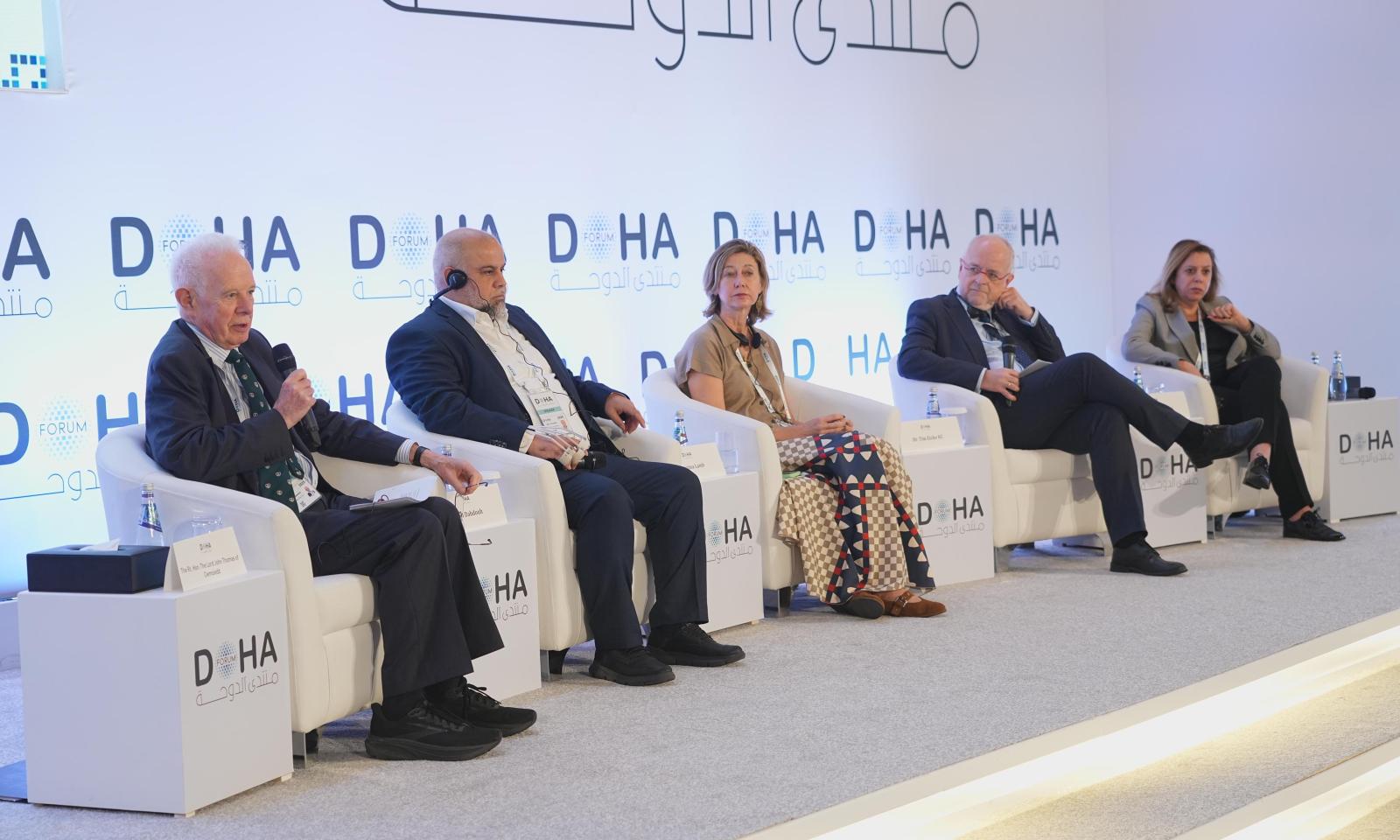
The Qatar International Court and Dispute Resolution Centre (QICDRC) successfully held its panel session, “Access to the Truth: Press Freedom and Global Affairs Reporting,” at Doha Forum 2025, bringing together prominent judicial, academic, and media voices to discuss the evolving challenges facing global journalism.
The session examined the obstacles journalists encounter when reporting from regions affected by conflict, political restrictions, and humanitarian emergencies. Speakers also explored how national security considerations, limited transparency, misinformation, and the rapid spread of unverified content on social media influence public understanding and international awareness. The discussion highlighted current access challenges in Gaza, Myanmar, and Afghanistan, including difficulties faced by journalists covering recent natural disasters and humanitarian events.
The panel was chaired by Lord Thomas of Cwmgiedd, President of QICDRC and former Lord Chief Justice of England and Wales.
Panellists included Tim Eicke KC (The most recent former UK judge on the European Court of Human Rights), Dr Fatima El Issawi (University of Essex), Mr Wael Dahdouh (Al Jazeera), and Christina Lamb (The Times, UK).
Commenting on the importance of the session, Lord Thomas of Cwmgiedd said:
“The ability of journalists to access and report the truth is fundamental to accountability and public confidence. As global crises continue to unfold, safeguarding access to reliable information becomes essential for justice and responsible governance. Much more attention needs to be given to enforcing the rights the law gives to journalists.”
Reflecting on the realities faced by journalists in conflict zones, Wael Dahdouh remarked:
“The challenges on the ground are immense, yet the world relies on journalists to convey an accurate picture of unfolding events. Strengthening protections for reporters is vital to ensure that the truth reaches the public.”
QICDRC’s participation in Doha Forum 2025 reflects its continued commitment to promoting transparency, strengthening the rule of law, and supporting meaningful dialogue on the role of accurate reporting in today’s global landscape. The panel served as a timely platform to explore how legal and institutional frameworks can enhance journalists’ ability to access information and uphold the public’s right to know.